
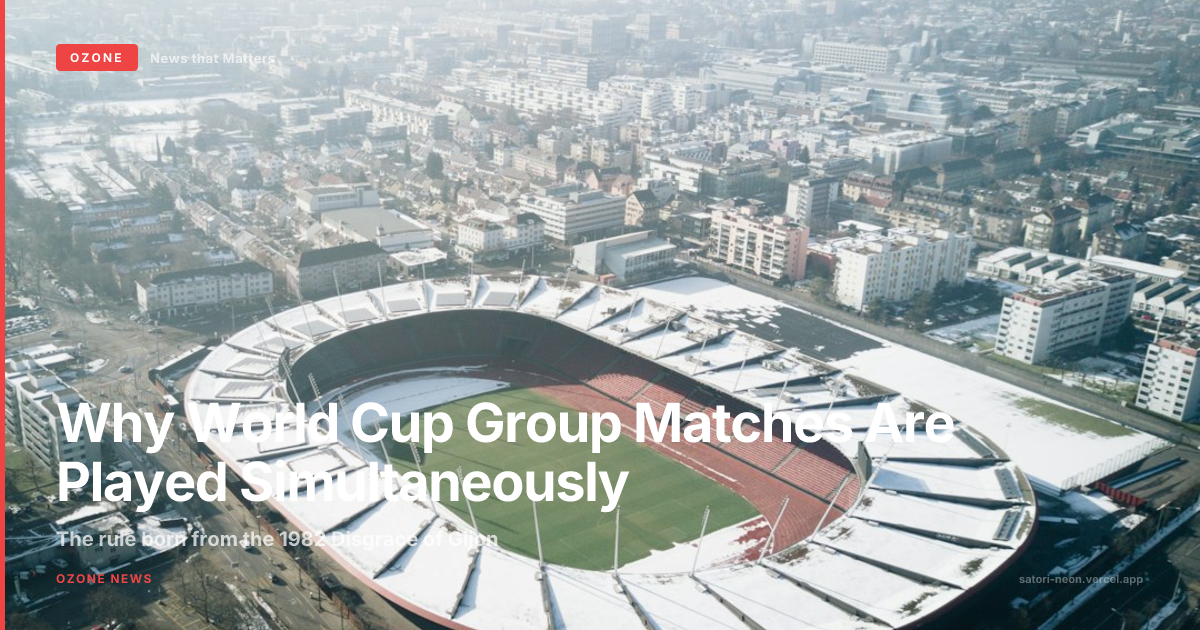
FIFA plays the final group matches of every World Cup at the exact same time, and the reason is simple: to protect the fairness of the competition. The rule stops any team from knowing another team's score before it finishes its own game, and it prevents two teams from agreeing on a result that helps both of them while hurting a third.
The rule has been in place since 1986, and it exists because of one of the most infamous matches in soccer history. For the full picture of how the 2026 tournament was structured, see the World Cup 2026 hub.
Fair Play | Why Simultaneous Kickoffs Matter
In the final round of group play, the two matches in each group kick off at the same moment. This is a deliberate design choice with two goals. First, it stops any team from knowing another team's score before it finishes its own game, which would let a team play for a specific result rather than a win. Second, it removes the incentive for two teams to collude on a scoreline that benefits both of them while eliminating a third team.
Without simultaneous kickoffs, a team playing later in the day could know exactly what result it needs to advance, and two teams could quietly arrange a mutually convenient outcome. The simultaneous format makes that kind of manipulation far harder to pull off.
The Disgrace of Gijon | The Match That Forced the Rule
The rule traces directly to a single match at the 1982 World Cup in Spain. On June 25, 1982, West Germany faced Austria in Gijon in the final group match. West Germany scored early through Horst Hrubesch in the 10th minute, and then both teams effectively stopped trying to score. The 1-0 result sent both West Germany and Austria through to the next round, and it eliminated Algeria, which had already played its final match and could only watch.
The match became known as the Disgrace of Gijon, and it embarrassed FIFA enough that the governing body changed the rules. Starting with the 1986 World Cup in Mexico, the final group matches in each group have been played simultaneously.
The Rule at the 2026 World Cup
The 2026 World Cup, the first with 48 teams, used the same simultaneous kickoff format for every final group-stage matchday across its 12 groups. You can see how those groups were drawn in our full group stage draw breakdown, and the complete match calendar is in our World Cup 2026 schedule guide.
The simultaneous kickoff rule is one of the quiet safeguards that keeps the World Cup honest, and it has been doing that job for four decades.